_edited.png)


Dry Eyes After Starting an Antidepressant? You’re Not Making It Up.

SSRIs, SNRIs, and what to do when your eyes feel like they’re auditioning for “Desert Planet: The Musical.”
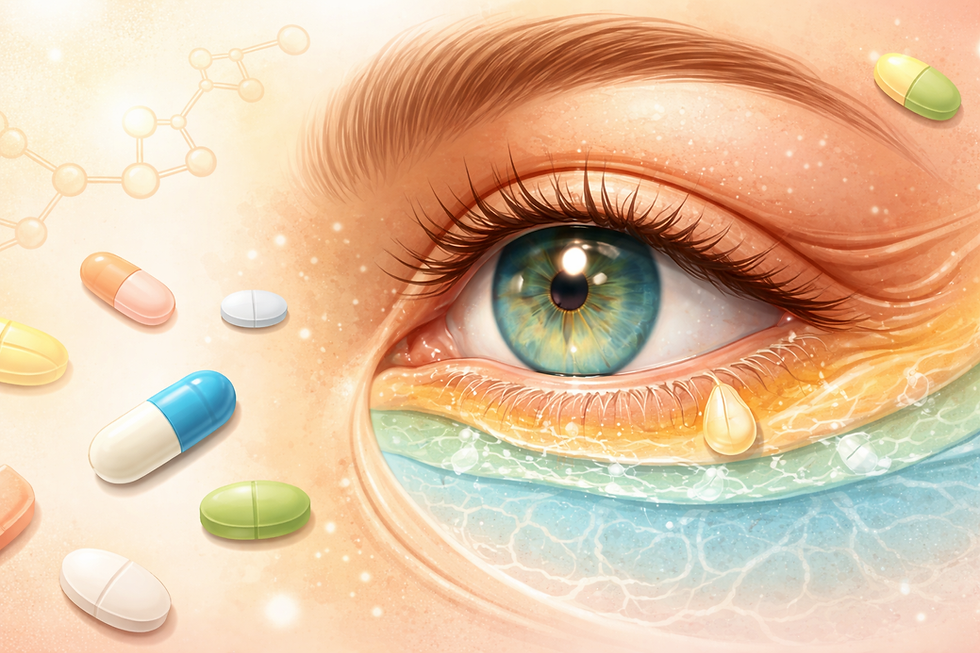
If you started an antidepressant and then noticed burning, stinging, redness, watery eyes, or that gritty “sand in the eyes” feeling, you’re not being dramatic—and you’re definitely not alone. Dry eye symptoms are a very real (and very common) side effect with several mood medications, especially the ones used for depression and anxiety.
What frustrates me is how often no one connects the dots for patients. You’re trying to take care of your mental health (good), and suddenly your eyes decide to stage a protest (not helpful). The goal isn’t to choose one or the other. The goal is to support both.
Let’s break down what’s happening and what you can do—without making any medication changes on your own.
Why antidepressants can dry out your eyes
Your eyes stay comfortable because of a healthy tear film—think of it as a three-layer “windshield”:
Oil layer (from eyelid oil glands) slows evaporation
Water layer hydrates the surface
Mucus layer helps the tears spread evenly
Antidepressants can disrupt this system in two common ways:
1) They can reduce tear production
Some antidepressants influence neurotransmitters and the autonomic nervous system—both of which play a role in tear secretion. When tear production drops, the surface of the eye gets irritated faster.
2) They can increase tear evaporation
Your eyelids have oil glands (meibomian glands) that release oils into your tears. If those glands underperform, tears evaporate too quickly—even if your eyes are still “making tears.” (And yes, watery eyes can still be dry eyes. The body is weird like that.)
Bottom line: you end up with unstable, poor-quality tears, and your eyes feel it.
Which antidepressants are most commonly linked to dry eye?
Almost any antidepressant can contribute, but these are the usual suspects:
SSRIs (Selective Serotonin Reuptake Inhibitors)
Common examples:
Sertraline (Zoloft)
Fluoxetine (Prozac)
Escitalopram (Lexapro)
Citalopram (Celexa)
Paroxetine (Paxil)
These are widely prescribed—and commonly associated with dryness over time.
SNRIs (Serotonin-Norepinephrine Reuptake Inhibitors)
Common examples:
Venlafaxine (Effexor)
Duloxetine (Cymbalta)
Desvenlafaxine (Pristiq)
Patients on SNRIs frequently report burning, fluctuating vision, and contact lens intolerance.
Tricyclic antidepressants (TCAs)
Common examples:
Amitriptyline
Nortriptyline
Imipramine
These are older meds with stronger “drying” (anticholinergic) effects—eyes, mouth, and everything else.
Atypical antidepressants
Examples:
Bupropion (Wellbutrin)
Mirtazapine (Remeron)
Some people do fine on these; others still notice significant eye symptoms. Bodies are annoyingly individualized.
Symptoms that often show up
Antidepressant-related dry eye can look like:
Burning or stinging
Gritty/sandy feeling
Redness
Blurry or fluctuating vision (especially while reading or on screens)
Excessive tearing (reflex tearing)
Light sensitivity
Contact lens discomfort
Symptoms often get worse with screen time, reading, driving, ceiling fans, and dry indoor air—basically modern life.
What you can do (without choosing between mental health and eye comfort)
Here’s the part I actually care about: practical relief that works.
Start with the eyelids (yes, really)
Most chronic dry eye is driven by eyelid inflammation and oil gland dysfunction. If the oil layer is weak, tears evaporate fast.
Use an optometrist-recommended eyelid cleanser (many patients do well with products containing hypochlorous acid, and some formulas include ingredients like tea tree or okra extract)
Clean along the lid margin and lash line gently for ~30 seconds
Rinse with warm water
Remove eye makeup fully every night (no aggressive scrubbing—your eyelids are not a cast-iron skillet)
Consistency matters more than intensity. Daily beats “once a week when I remember.”
Use lubricating drops strategically
Choose preservative-free artificial tears (especially if using more than 3–4x/day)
Use them to support, not to “white-knuckle” your way through symptoms
Avoid “get-the-red-out” drops—those can backfire and worsen dryness long-term
Add warm compresses
Warm compress over closed lids for 8–10 minutes daily
Gentle lid massage afterward can help improve oil flow
If your compress is warm for 30 seconds and then turns into a sad, lukewarm washcloth… it’s not doing much.
Make the environment less hostile
Humidifier in the bedroom or office
Reduce direct airflow from fans/vents
Screen breaks: 20-20-20 rule (every 20 minutes, look 20 feet away for 20 seconds)
Blink intentionally during screens (your blink rate drops more than you think)
Re-think contact lens habits (temporarily)
Reduce wearing time if symptoms spike
Ask about dry eye–friendly lens materials or daily disposables
Some patients do better with glasses during flare-ups while we calm the surface down
When to talk to your prescriber or your eye doctor
Do not stop or change your antidepressant without medical guidance. But absolutely ask for help if:
Symptoms last more than a few weeks
Vision gets blurry, painful, or light-sensitive
Drops aren’t cutting it anymore
Dry eye is affecting daily life (or your mood—which matters)
Your prescriber might consider dose adjustment or a medication switch if appropriate. Your eye doctor may recommend treatments that actually address the root problem, including prescription options and targeted therapies for inflammation and oil glands.
The bottom line
Dry eye from antidepressants is common—especially with SSRIs and SNRIs—and it’s treatable. You deserve to feel emotionally steadier and physically comfortable.
If your eyes started acting up after starting (or changing) a mood medication, take it seriously—and get evaluated. A smart plan often starts with the eyelids, supports the tear film, and reduces inflammation. That’s how we get you comfortable again.
FAQ
Can antidepressants cause dry eyes?
Yes. They can reduce tear production and/or disrupt the tear film—especially the oil layer—leading to irritation and fluctuating vision.
Which antidepressants are most likely to cause dry eyes?
Commonly associated meds include SSRIs like Zoloft, Prozac, Lexapro, Celexa, Paxil and SNRIs like Effexor, Cymbalta, Pristiq.
How soon can dry eye start after beginning an antidepressant?
Sometimes within weeks, sometimes months. It can also become more noticeable over time with long-term use.
Will it go away if I stop the medication?
It may improve with medication changes, but don’t stop or adjust antidepressants on your own. Many patients manage dry eye successfully while staying on treatment.
Are artificial tears enough?
They help, but long-term improvement usually requires addressing eyelid health, tear film stability, and inflammation—not just adding more drops.
When should I see an eye doctor?
If symptoms persist more than a few weeks, affect vision, or interfere with daily life, schedule an exam. Dry eye is a medical condition, not just a nuisance.

Comments