_edited.png)


Advanced Eye Care Technology in Omaha, NE
Modern Diagnostic Technology for Earlier Detection & Better Vision Care
At Exclusively Eyecare, we invest in advanced diagnostic and treatment technology because modern eye care should be proactive—not reactive.
Our technology allows us to identify problems earlier, monitor them more accurately, and personalize treatment for every patient.
Why Advanced Eye Technology Matters
Your Eyes Can Change Before You Notice.
Many eye conditions—including glaucoma, macular degeneration, diabetic eye disease, and retinal disorders—can cause permanent vision loss before you notice symptoms.
Advanced imaging and testing help us:
✅ Detect disease earlier
✅ Monitor subtle changes over time
✅ Improve treatment accuracy
✅ Provide more personalized care
✅ Better coordinate care with your medical doctors
Technology We Use:
Conditions We Commonly Diagnose & Manage:
Using advanced technology, we help diagnose and monitor:
-
Retinal disease
-
Neurological eye conditions
Maestro2 OCT
Advanced Retinal & Optic Nerve Scanning
The Maestro2 OCT allows us to capture detailed cross-sectional images of the retina and optic nerve in seconds.
This technology helps detect and monitor:
-
Retinal swelling
-
Optic nerve disease
Why It Matters
Many retinal and optic nerve diseases begin long before vision changes occur. OCT helps us identify microscopic changes early—when treatment is most effective.


Optos Widefield Retinal Imaging
See More of Your Retina Without Dilation
Optos ultra-widefield imaging captures up to 200 degrees of the retina in a single image, helping us evaluate areas that may otherwise be difficult to see.
This technology helps detect and monitor:
-
Retinal tears and detachments
-
Peripheral retinal disease
-
Melanomas and retinal lesions
Read more > about the difference between Optos and dilated eye exams
Visual Field Testing
Detecting Functional Vision Loss Early
Visual field testing measures how well you see in your peripheral vision.
The Tempo visual field system uses advanced eye-tracking and faster testing technology to improve patient comfort and reliability.
This technology helps detect and monitor:
-
Neurological conditions
-
Stroke-related vision loss
-
Optic nerve disorders
Why It Matters
Conditions like glaucoma often damage peripheral vision first—and patients may not notice changes until significant loss has occurred.


RETeval (ERG)
Advanced Retinal Function Testing
The Reteval system evaluates how well retinal cells are functioning using electroretinography (ERG).
This technology helps detect and monitor:
-
Certain inherited retinal conditions
-
Early retinal stress before visible damage develops
Why It Matters
Sometimes retinal cells become unhealthy before structural damage appears on imaging. Functional testing provides another layer of early detection.
AdaptDx Dark Adaptation Testing
Early Detection of Macular Degeneration
The AdaptDx measures how quickly your eyes adjust from bright to dark environments.
Difficulty adapting to darkness can be one of the earliest signs of macular degeneration.
Symptoms You May Notice:
-
Trouble driving at night
-
Difficulty seeing in dim lighting
-
Slow adjustment entering dark rooms
Why It Matters
AMD often develops silently. AdaptDx helps identify early functional changes before major vision loss occurs.


Rabin Cone Contrast Test
Advanced Color Vision & Neurological Testing
The Rabin Cone Contrast Test (RCCT) evaluates subtle color vision deficiencies that standard screening tests may miss.
This technology helps detect and monitor:
-
Neurological disorders
-
Retinal disease
-
Acquired color vision deficiencies
Why It Matters
Color vision changes can be an early sign of neurological or retinal dysfunction.
Corneal Topography & Axial Length Measurement
Precision Mapping for Myopia & Specialty Contacts
Corneal topography creates a detailed map of the front surface of the eye. Axial length measures the physical length of the eye.
These Technologies Are Essential For:
-
Orthokeratology (Ortho-K)
-
Keratoconus detection
Why It Matters

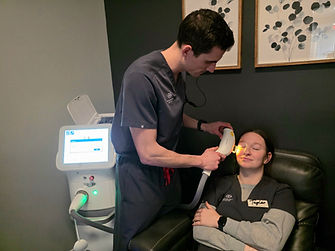
Advanced Light Therapy for Dry Eye Disease
OptiLight IPL uses precise pulses of light to reduce inflammation and improve meibomian gland function in patients with dry eye disease.
IPL may help treat:
-
Chronic red eyes
Why It Matters
Dry eye is often caused by inflammation—not simply a lack of tears. IPL helps address the underlying disease process.
👉Learn more about our IPL Dry Eye Treatment
LipiFlow Thermal Gland Treatment
Treating Blocked Oil Glands at the Source
LipiFlow combines therapeutic heat and gentle pressure to unclog blocked meibomian glands.
Benefits May Include:
-
Improved tear stability
-
Reduced burning and irritation
-
Better contact lens comfort
-
Reduced dependency on artificial tears
Why It Matters
Healthy oil glands are critical for maintaining comfortable vision.
👉 Learn more about our Dry Eye Treatments


Newton Lens (Formerly Neurolens)
Advanced Lens Technology for Eye Strain & Visual Comfort
The Newton Lens system measures subtle eye misalignment and visual strain that can contribute to headaches, fatigue, and discomfort. These customized lenses incorporate specialized prism technology designed to help the eyes work together more comfortably.
Benefits May Include:
-
Headaches around the eyes or forehead
-
Neck and shoulder tension related to visual tasks
-
Fatigue during reading or computer work
-
Difficulty focusing for long periods
-
Light sensitivity
-
Motion sensitivity or dizziness in some patients
Why It Matters
Many patients experience chronic symptoms from small eye alignment issues that often go undetected during routine screenings.
Newton Lenses help reduce stress on the visual system—especially for patients who spend long hours on computers, phones, or other digital devices.
👉 Learn more about Computer Vision Syndrome
Frequently Asked Questions
Why do I need advanced imaging during an eye exam?
Advanced imaging helps detect disease earlier and provides objective documentation to monitor changes over time.
Is retinal imaging better than dilation?
Widefield imaging is extremely valuable, but some patients may still require dilation depending on their eye health. Read More >
Are these tests covered by insurance?
Coverage varies depending on the test and medical necessity. We discuss recommendations and costs before testing.
How often should these tests be performed?
This depends on your age, risk factors, and medical history. Some patients benefit from annual monitoring.
Protect Your Vision With Modern Eye Care
Technology alone doesn’t replace experience—but combined with personalized care, it can dramatically improve early detection and treatment outcomes.
Schedule Your Eye Exam in Omaha Today
📍 Exclusively Eyecare – Omaha, Nebraska
📞 Call Today
📅 Request Online Appointment