_edited.png)


How a Detailed Glaucoma Evaluation Helped an Omaha-Area Pilot Keep Flying

A Pilot, a Glaucoma Concern, and the Risk of Losing the Ability to Fly
For pilots, vision is more than a routine health concern. It is directly tied to safety, certification, career, service, and identity.
Recently, I had the opportunity to help a local helicopter pilot who faced a serious concern: whether a history of traumatic glaucoma could threaten his FAA medical certificate and his ability to continue flying.
This pilot serves in a role where aviation is not recreational. Flying is part of his work, his public service, and his ability to continue serving the community. When questions arose about his eye history, the stakes were high.
He needed more than a routine eye exam. He needed a careful, evidence-based medical explanation that addressed the FAA’s concerns directly.
Why FAA Eye Forms Do Not Always Tell the Whole Story
The FAA often uses forms with checkboxes, measurements, and yes-or-no questions. Those forms are important. They create structure. They make sure critical information is reported consistently.
But a checkbox rarely tells the full story.
When a pilot has glaucoma, traumatic eye disease, visual field changes, prior eye surgery, or any condition that could raise aviation safety concerns, the FAA and aviation medical examiners need more than isolated data points. They need context.
They need to understand whether the condition is stable or progressing. They need to know whether the visual field defect is mild or functionally significant. They need to know whether one eye is affected or both eyes are involved. They need to know whether treatment is working, whether medications are causing side effects, and whether the pilot’s real-world visual function supports safe flight.
That is why, in cases like this, we take the evaluation a step further.
In addition to completing the necessary FAA documentation, I also prepare a detailed medical narrative when appropriate. This kind of report helps the FAA and special issuance medical reviewers see the complete picture rather than reducing a pilot’s future to a simple yes-or-no checkbox.
The narrative matters because it tells the clinical story.
The Eye History: A Remote Injury, Not Progressive Vision Loss
This pilot had a significant right-eye injury from a paintball accident in 2000. That injury caused several eye problems, including cataract formation, a corneal scar, an iris sphincter tear, and traumatic damage near the optic nerve.
The injury was surgically addressed at the time, including cataract surgery and placement of a posterior chamber intraocular lens.
Years later, during a comprehensive eye examination, traumatic glaucoma and related optic nerve findings were identified in the right eye. Importantly, this was not a new, rapidly progressive, bilateral disease process. It was a stable, unilateral condition tied to a remote traumatic injury.
That distinction mattered.
What the FAA Needs to Know in Glaucoma Cases
When a pilot has glaucoma or a glaucoma-related history, the FAA may request a detailed ophthalmological evaluation. The form asks for information such as the type of glaucoma, how it was discovered, how it was confirmed, treatment history, intraocular pressure control, visual fields, surgery history, and whether additional surgery is anticipated.
In other words, the FAA does not simply need to know whether a pilot has glaucoma.
They need to know:
Is the condition stable?
Is the pressure controlled?
Is the visual field safe?
Is the fellow eye normal?
Is there evidence of progression?
Are medications causing side effects?
Is surgery expected?
Are there functional visual limitations that could affect safe flight?
Those questions require more than a checkbox answer. They require a clear, organized medical narrative supported by objective testing.
The Advantage of Having a Treating Provider Write the Report
In this case, I was not seeing the pilot for the first time just to complete paperwork. I was his treating eye doctor.
That matters.
As his treating provider, I had the benefit of knowing his long-term ocular history, reviewing years of stability, and understanding how the objective test results fit into the larger clinical picture. A single test result can raise a question. A long-term pattern of stability can help answer it.
For FAA medical certification, that context can be critical.
A pilot’s future should not be determined only by whether a box is checked for “glaucoma” or “visual field defect.” The more important question is what those findings actually mean for the pilot’s functional visual ability and aviation safety.
That is where a detailed report can help.
The Evidence That Supported This Pilot’s Case
In this case, the pilot had been followed over many years, and the findings were stable.
His right eye had a mild, localized superior visual field defect related to the old traumatic injury. His left eye was normal. His visual acuity remained excellent. His intraocular pressure was controlled with timolol 0.5% twice daily in the right eye. His optic nerve appearance and OCT findings were stable. His corneal scar, iris findings, and intraocular lens had not changed.
The supporting evidence included:
Excellent best-corrected vision: 20/20-level vision in both eyes at distance, near, and intermediate.
Controlled eye pressure: Recent Goldmann applanation tonometry showed intraocular pressure of 15 mmHg in each eye.
Stable visual field testing: Reliable 24-2 visual field testing showed a stable mild superior visual field defect in the right eye and no defect in the left eye.
Stable OCT findings: Optic nerve OCT/GCC showed longstanding, stable right-eye RNFL changes consistent with traumatic injury, with full RNFL in the left eye.
No functional aviation concerns: There was no evidence of glare disability, double vision, reduced night vision, impaired peripheral awareness, fluctuating vision, eye pain, or medication side effects.
No anticipated surgery: No additional ocular or glaucoma surgery was expected within the next 24 months.
This objective medical evidence helped tell the correct story: the pilot had a stable right-eye traumatic condition, not an uncontrolled or progressive vision problem.
Why the Narrative Report Mattered
The FAA form was necessary, but the narrative report gave the findings meaning.
A checkbox can say that a visual field defect exists. A narrative can explain that the defect is mild, localized, stable, unilateral, and associated with a remote injury rather than a progressive bilateral disease process.
A checkbox can list a medication. A narrative can explain that the medication has controlled the pressure for years without side effects or adherence concerns.
A checkbox can report an intraocular pressure. A narrative can explain that the pressure is consistent with long-term control and stability.
A checkbox can identify glaucoma. A narrative can clarify whether glaucoma is progressing, controlled, traumatic, unilateral, or functionally limiting.
That is the difference between simply reporting data and helping the reviewer understand the pilot’s true visual function.
The Result: He Kept Flying
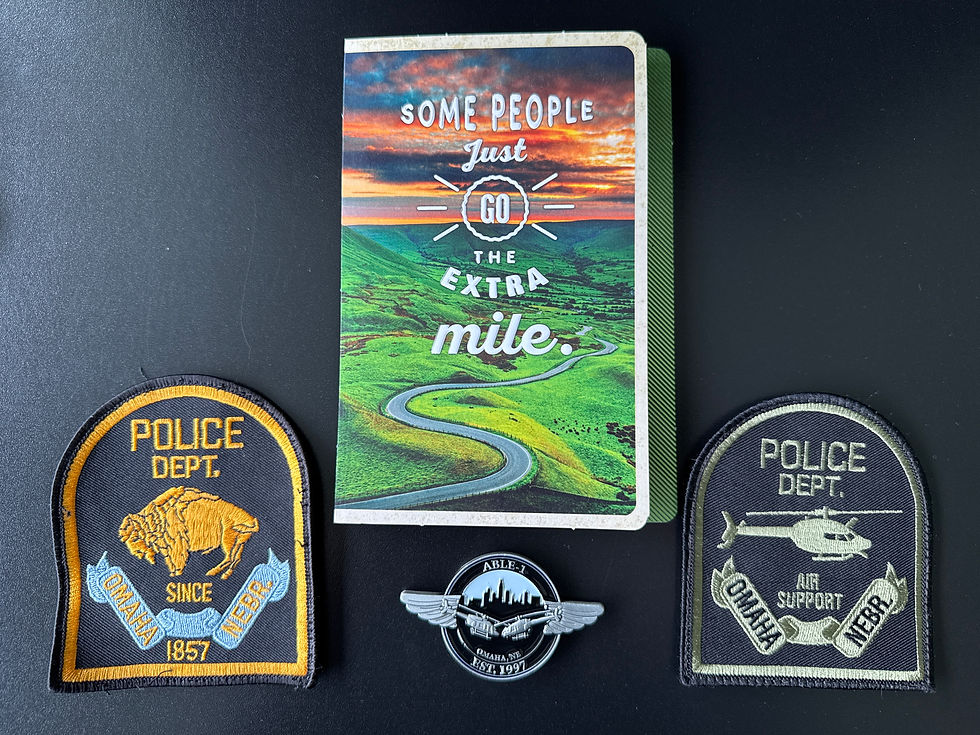
The letter and supporting documentation were successful.
This pilot was able to maintain his medical certificate and continue flying helicopters for the police department.
For him, this was not just about passing an eye exam. It was about preserving the ability to continue serving his community from the air.
Pilots Need Eye Care That Understands FAA Concerns
Pilots often face unique vision-related certification challenges. Conditions like glaucoma, traumatic eye injuries, cataract surgery, retinal disease, visual field defects, double vision, or reduced visual acuity can raise important FAA questions.
But a diagnosis alone does not always tell the whole story.
Many pilots can continue flying safely when their condition is stable, well documented, appropriately treated, and not causing functional visual limitations.
That is why the right evaluation matters.
At Exclusively EyeCare in Omaha, we understand that pilots need more than a standard glasses prescription. They may need careful documentation, objective testing, and a clear medical narrative that helps aviation medical examiners and FAA reviewers understand the full clinical picture.
FAA Glaucoma Evaluations in Omaha
If you are a pilot in Omaha, Council Bluffs, Elkhorn, Bennington, Gretna, Papillion, La Vista, Bellevue, Blair, Fremont, Lincoln, or the surrounding region and have been asked for additional eye documentation, our office can help evaluate and document conditions such as:
Glaucoma
Glaucoma suspect
Ocular hypertension
Traumatic glaucoma
Visual field defects
Prior cataract surgery
Optic nerve concerns
Medication-treated eye pressure
FAA-requested ophthalmological evaluations
Our goal is to provide a thorough, objective, and evidence-based evaluation that answers the right questions clearly.
Need an FAA Eye Evaluation?
If you are a pilot and have received a request for additional documentation related to glaucoma or another eye condition, schedule an evaluation with our office.
Bring any FAA paperwork, prior eye records, visual field tests, OCT reports, medication history, and surgical history with you. The more complete the information, the better we can help document your case accurately.



Comments